
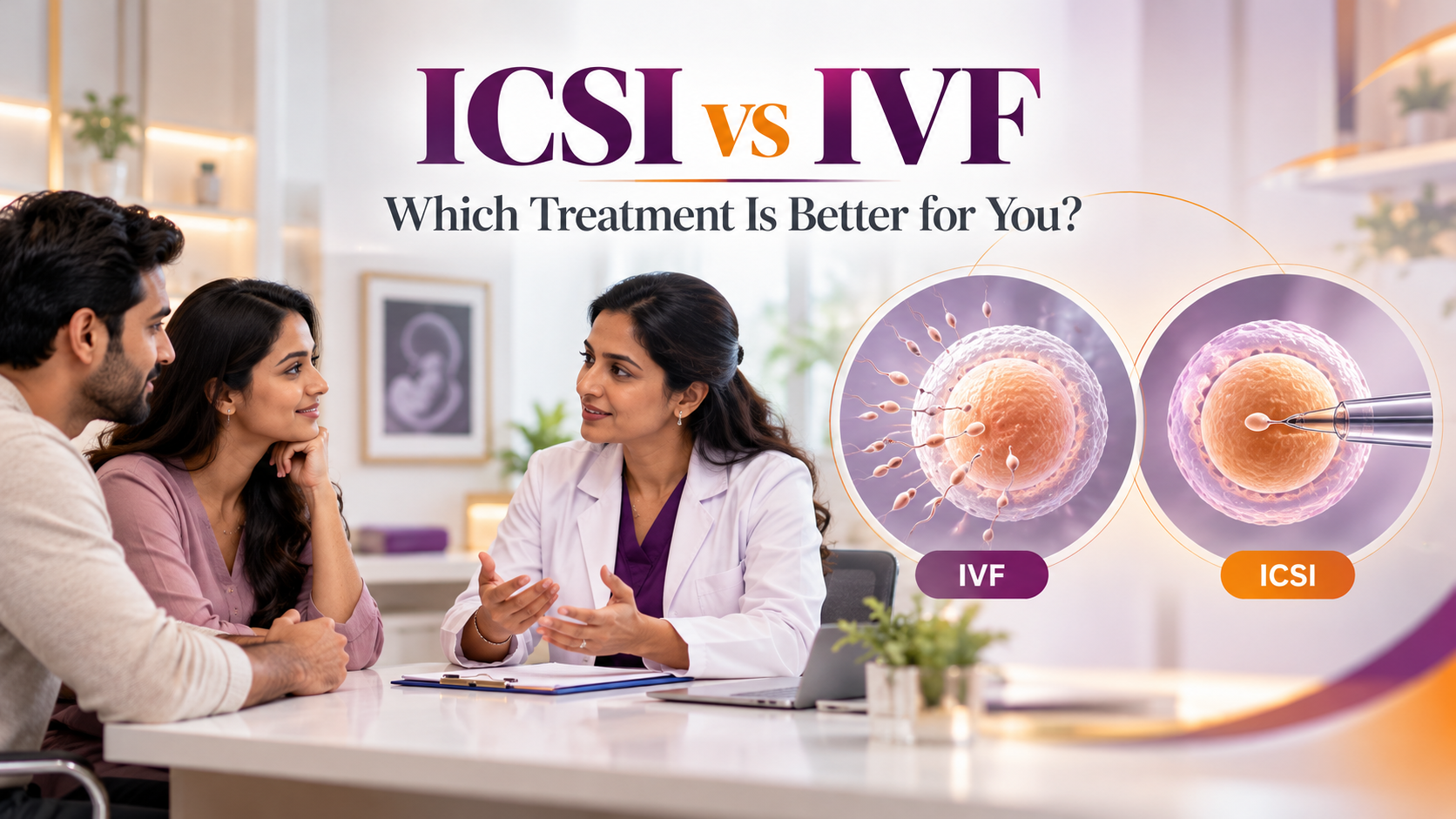
Is ICSI Better Than IVF? Understanding Which Treatment May Be Right for You is a common question among couples comparing assisted reproductive treatments. IVF and ICSI share many treatment steps, but they differ in how fertilisation is achieved in the laboratory. Choosing between them depends mainly on the fertility diagnosis rather than on the idea that one is universally “better.”
How the treatments differ
IUI places prepared sperm inside the uterus around ovulation and relies on fertilisation occurring in the body. IVF involves ovarian stimulation, egg retrieval and laboratory fertilisation. ICSI is a laboratory technique used within IVF in which one sperm is injected into an egg.
Who may benefit
IUI may be suitable in selected cases with open tubes, ovulation potential and adequate sperm parameters. IVF is often considered for tubal blockage, significant endometriosis, low ovarian reserve in some contexts, prolonged infertility or failed simpler treatment. ICSI is mainly used for significant male-factor infertility, surgically retrieved sperm or previous fertilisation problems.
Success is not determined by the acronym
Age, egg number and quality, sperm factors, embryo development, uterine conditions and diagnosis all influence outcome. ICSI can improve fertilisation in the right indication but does not automatically improve pregnancy rates for every IVF patient.
Risks, cost and treatment burden
IUI is less invasive and usually less expensive per cycle but may require multiple attempts. IVF is more intensive and costly but offers more laboratory information and can bypass some causes of infertility.
Making the decision
A good treatment plan explains why a particular option is being recommended, what alternatives exist, expected chances based on your profile and when the plan would change if treatment is unsuccessful.
When should you speak with a fertility specialist?
If ICSI vs IVF is affecting your cycles, sexual or reproductive health, pregnancy planning, or previous treatment decisions, an individual consultation can clarify what testing is actually useful. Seek earlier advice when there is severe pain, abnormal bleeding, a known medical condition, previous pelvic or reproductive surgery, significant semen abnormalities, recurrent pregnancy loss, or when age makes prolonged waiting less appropriate.
Key takeaway
The most useful way to approach ICSI vs IVF is to avoid one-size-fits-all advice. Fertility care works best when the diagnosis, age, medical history, reproductive goals and both partners’ factors are considered together. Evidence-based treatment may be simple in some cases and more advanced in others, but the goal should always be the least unnecessary intervention with a clear clinical reason.
Medical disclaimer: This article is for general educational purposes and is not a substitute for personalised diagnosis or treatment from a qualified healthcare professional.
Practical questions to discuss at your appointment
Before making a treatment decision, ask what the diagnosis is based on, whether any test should be repeated, and how the result changes management. Ask what happens if you choose to wait, whether a simpler option is reasonable, and which outcomes the clinic uses when discussing success. If a treatment involves medication, surgery or an assisted reproductive procedure, understand the expected benefits, common side effects, alternatives and the point at which the plan would be reviewed.
For ICSI vs IVF, it is also useful to separate tests that are essential from optional “add-ons”. More testing is not always better. A test is most valuable when the result is likely to change what you and your doctor do next. The same principle applies to supplements and laboratory technologies: use them for a clear indication rather than because they sound advanced.
If pregnancy is the goal, evaluate both partners where relevant and consider age early in the decision. Fertility is time-sensitive, but that does not mean every patient needs IVF immediately. Good care balances timely action with avoiding unnecessary intervention.
Everyday planning
Keep a simple record of menstrual dates, major symptoms, relevant test reports, current medicines and previous fertility treatment. Bring these to your consultation. This can reduce repeated testing and helps the clinician see trends rather than isolated results. If you are using supplements, herbal products, hormones or gym medications, include them on the list because they can affect reproductive health or interact with treatment.
Reliable fertility information should make decisions clearer, not more frightening. Be cautious with claims that a single food, device, supplement or procedure can “guarantee” conception. For most fertility conditions, the best plan is a sequence: identify the main problem, choose the least invasive reasonable treatment, review the response and escalate only when there is a clinical reason.
Common misconception to avoid
A common mistake with ICSI vs IVF is to assume that one abnormal result automatically predicts infertility or that one treatment works for everyone. Fertility findings should be interpreted in context. Age, duration of trying, menstrual pattern, semen results, previous pregnancies, medical history and earlier treatment can all change what a result means. Ask your clinician which finding is actually driving the treatment recommendation and which findings are simply being monitored.





0 Comments
Join the conversation