
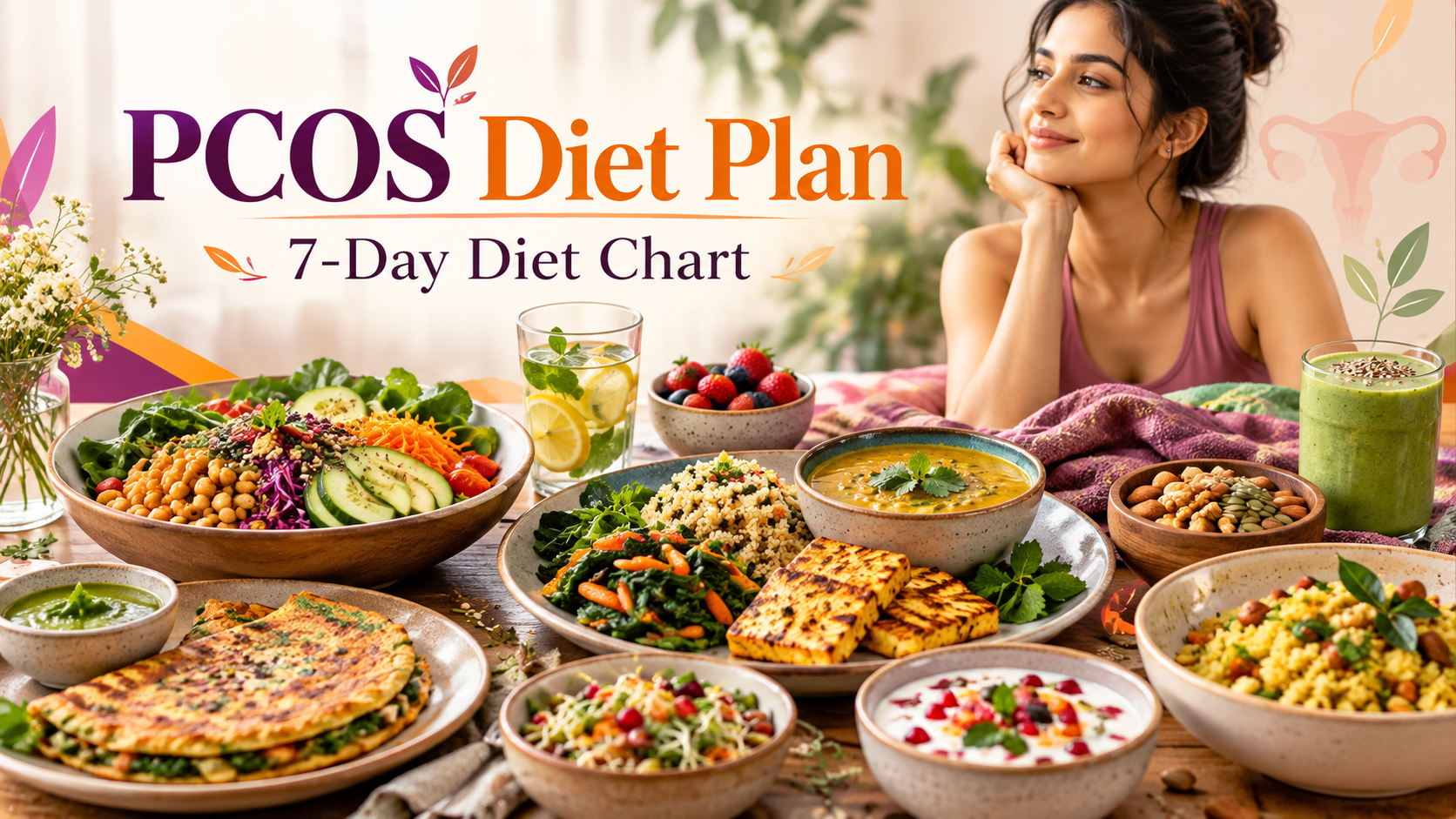
A practical PCOS diet plan should support overall metabolic health without turning everyday eating into a restrictive rulebook. PCOS is a hormonal and metabolic condition, and many women also have insulin resistance, but there is no single diet proven to be best for everyone. The most useful plan is balanced, sustainable and suitable for your culture, budget, activity level and medical needs.
What should a PCOS-friendly plate look like?
Build most meals around four components: a protein source, vegetables, a sensible portion of high-fibre carbohydrate and a small amount of healthy fat. Indian foods such as dal, chana, rajma, curd, paneer, tofu, eggs, fish, chicken, whole-wheat roti, oats, millets and vegetables can all fit.
Protein may improve satiety and helps prevent meals from becoming predominantly refined carbohydrate. Fibre from vegetables, pulses, whole grains, nuts, seeds and whole fruit supports digestive and metabolic health. There is no need to remove all carbohydrates or all fruit.
Foods to include more often
Choose minimally processed foods most of the time. Useful options include vegetables, whole fruits, dals, beans, lentils, curd, paneer, tofu, eggs, nuts, seeds, oats, daliya, whole-wheat roti and appropriately portioned rice. Unsweetened beverages and adequate water are preferable to sugary drinks.
Healthy eating does not mean every meal must be “perfect”. Consistency matters more than an occasional dessert or restaurant meal.
7-day PCOS diet chart
- Day 1: vegetable oats with curd; fruit and almonds; dal, roti, sabzi and salad; roasted chana; paneer with vegetables.
- Day 2: moong-dal chilla; guava; rajma with brown rice and salad; plain curd with seeds; tofu stir-fry with roti.
- Day 3: poha with peanuts and curd; pear; chana dal with vegetables; sprouts chaat; grilled paneer or fish with vegetables.
- Day 4: besan chilla; papaya; vegetable khichdi with curd; makhana; palak paneer with roti.
- Day 5: curd with oats, fruit and seeds; seasonal fruit; chickpea bowl; nuts; soybean or chicken curry with vegetables.
- Day 6: vegetable upma with curd; apple; dal, brown rice and sabzi; roasted peanuts; paneer tikka with soup.
- Day 7: paneer bhurji or egg omelette with whole-grain toast; orange; mixed dal, roti, vegetables and curd; makhana; lentil soup with tofu or paneer.
Portion sizes are intentionally not fixed because calorie and protein needs differ between individuals. Someone who is very active, underweight, pregnant or trying to gain muscle will need a different plan from someone who is sedentary or has diabetes.
What should be limited?
Frequent sugary drinks, sweetened coffee beverages, packaged juices, refined bakery foods, deep-fried snacks and heavily processed foods can make it harder to maintain a nutrient-dense pattern. You do not need to label foods as “forbidden”; instead, reduce how often they replace balanced meals.
Does a low-carb diet cure PCOS?
No. Some women may benefit from reducing refined carbohydrates or adjusting overall carbohydrate intake, particularly when insulin resistance or diabetes is present, but PCOS cannot be cured by removing carbohydrates. Extremely low-carb diets are not necessary for everyone and can be difficult to sustain.
Do all women with PCOS need weight loss?
No. PCOS occurs in women across body sizes. Lifestyle care is beneficial even without weight loss. For women with higher body weight, modest weight reduction may improve some metabolic or ovulatory features when clinically appropriate, but crash diets should be avoided.
PCOS diet and fertility
Nutrition supports overall reproductive health, but it cannot correct every cause of infertility. If ovulation is irregular, treatment may include ovulation induction. If there are additional factors such as tubal disease, significant male-factor infertility or age-related concerns, IUI or IVF may be considered.
Supplements: useful or overhyped?
Do not assume that inositol, vitamin D, antioxidants or herbal products are automatically needed. Correct a documented deficiency and use supplements only after discussing dose, quality and possible interactions with your clinician or dietitian.
When to seek help
Consult a doctor if periods are very irregular, you go several months without bleeding, you have symptoms of high androgens, or pregnancy is not occurring within the expected time for your age. A complete fertility evaluation should include both partners when conception is the goal.
Key takeaway
The best PCOS diet plan is not a detox or a rigid “PCOS menu”. It is a realistic pattern based on adequate protein, fibre, vegetables, whole foods and sensible portions that you can maintain over time.
Medical disclaimer: This sample plan is for general education and does not replace personalised nutrition or medical advice.
Practical questions to discuss at your appointment
Before making a treatment decision, ask what the diagnosis is based on, whether any test should be repeated, and how the result changes management. Ask what happens if you choose to wait, whether a simpler option is reasonable, and which outcomes the clinic uses when discussing success. If a treatment involves medication, surgery or an assisted reproductive procedure, understand the expected benefits, common side effects, alternatives and the point at which the plan would be reviewed.
For PCOS diet plan, it is also useful to separate tests that are essential from optional “add-ons”. More testing is not always better. A test is most valuable when the result is likely to change what you and your doctor do next. The same principle applies to supplements and laboratory technologies: use them for a clear indication rather than because they sound advanced.
If pregnancy is the goal, evaluate both partners where relevant and consider age early in the decision. Fertility is time-sensitive, but that does not mean every patient needs IVF immediately. Good care balances timely action with avoiding unnecessary intervention.





0 Comments
Join the conversation