

The report often arrives quietly.
A PDF on WhatsApp. A lab value circled in red. A number followed by a reference range. Sometimes the doctor has not even explained it yet.
But Google has.
Within minutes, a woman may be reading words like “low ovarian reserve,” “poor response,” “egg count,” “IVF,” “donor eggs,” and “time running out.”
Suddenly, her future feels compressed into a decimal.
This is the strange power of AMH.
It is one blood test. Yet for many women in Noida and Delhi NCR, it can feel like a verdict.
But low AMH is not the end of the story.
It is a clue.
And clues should be taken seriously, not feared blindly.
What is AMH?
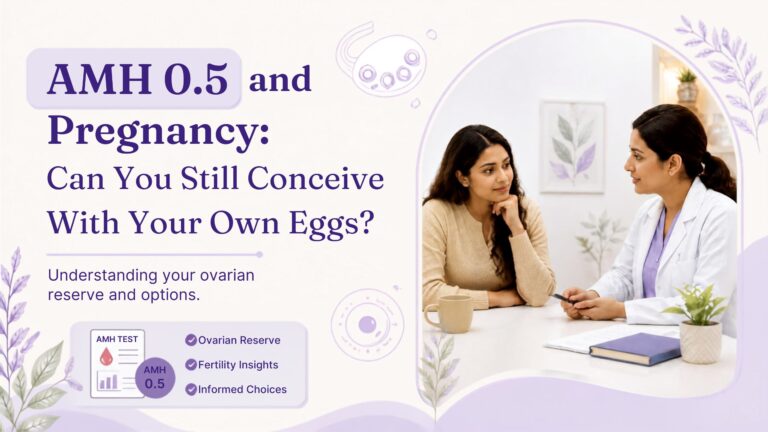
AMH stands for anti-Müllerian hormone. In women, it is produced by small developing follicles in the ovaries. Fertility doctors use AMH as one marker of ovarian reserve, which broadly means the remaining pool of eggs in the ovaries.
The CDC lists AMH, FSH and antral follicle count as common markers used to assess ovarian function, while also making an important point: no single test is a perfect predictor of fertility.
That one sentence should be printed on every AMH report.
AMH is useful.
AMH is not everything.
What low AMH may suggest
Low AMH may suggest that the ovaries have fewer recruitable eggs than expected for age. It can be especially useful when planning fertility treatment because it may help doctors estimate how the ovaries might respond to stimulation medicines.
For example, in IVF, a woman with lower AMH may produce fewer eggs during stimulation than a woman of the same age with higher AMH. This can affect counselling, medicine dosing, expected egg numbers and urgency.
But AMH does not directly measure egg quality. Age is often more important for egg quality. ASRM’s ReproductiveFacts explains that age has a major effect on fertility because egg quality and number decline in the 30s and 40s.
A 32-year-old with low AMH and a 42-year-old with the same AMH are not the same clinical story.
Age changes the meaning of the number.
What low AMH does not mean
Low AMH does not automatically mean you cannot get pregnant naturally.
It does not mean every egg is poor quality.
It does not mean IVF will definitely fail.
It does not mean you must start treatment tomorrow morning.
And it does not mean your body has betrayed you.
AMH mainly gives information about ovarian reserve. It does not tell whether your fallopian tubes are open. It does not assess sperm. It does not confirm ovulation quality. It does not inspect the uterus. It does not know how long you have been trying, whether you have endometriosis, whether you have had ovarian surgery or whether pregnancy has happened before.
That is why interpreting AMH alone is like judging an entire movie from one still frame.
Important? Yes.
Complete? No.
Why women panic after AMH testing
Because the number feels personal.
A cholesterol report may worry you. A thyroid report may annoy you. But a low AMH report can feel like it has reached into your private dream of motherhood and started doing arithmetic.
This panic is made worse by social media. One post says freeze your eggs immediately. Another says low AMH can be reversed. A clinic ad says time is running out. A supplement brand says you can improve egg reserve.
The truth is less dramatic and more useful.
You cannot create a large new supply of eggs through a supplement. But you can make better decisions with the time and ovarian reserve you have.
That is where proper consultation matters.
The questions a doctor should ask
A good low AMH review should not begin and end with the number.
It should ask:
How old are you?
Are your periods regular?
How long have you been trying?
Have you ever been pregnant?
Have you had ovarian surgery, endometriosis or chemotherapy?
What is your antral follicle count on ultrasound?
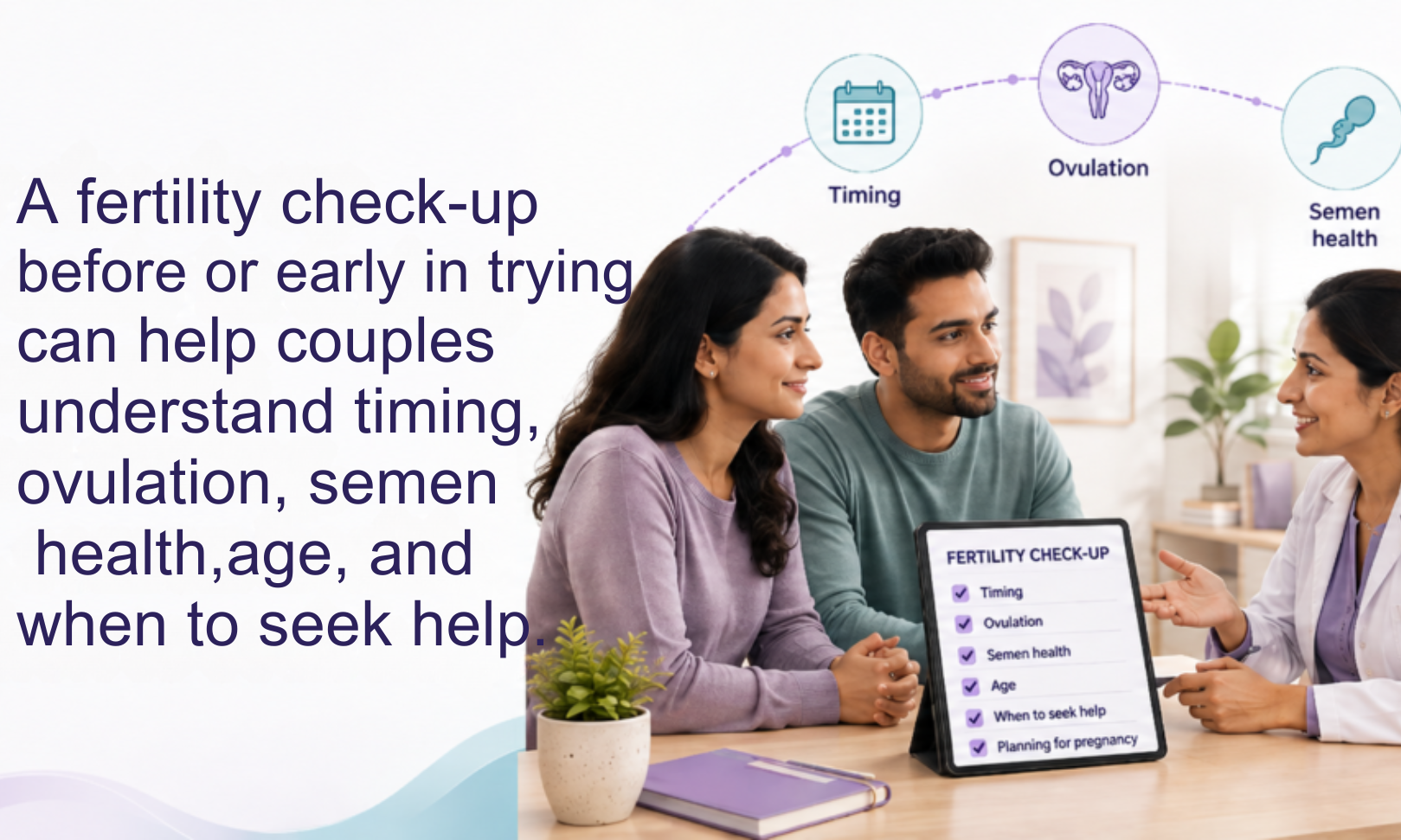
What is your partner’s semen analysis?
Are the tubes open?
Are there thyroid, prolactin, diabetes or PCOS factors?
Do you want a baby now, or are you considering delay?
A low AMH report in a woman actively trying to conceive needs one kind of discussion. Low AMH in a woman considering egg freezing needs another. Low AMH after endometrioma surgery needs another. Low AMH at 39 needs a more urgent conversation than low AMH at 29.
The number matters because the context matters.
Should you keep trying naturally?
Sometimes, yes.
If you are younger, ovulating, tubes are open, semen analysis is normal and you have not been trying long, your doctor may discuss a period of continued trying.
But if you are over 35, have been trying for months, have very low AMH, have endometriosis, or have other factors, waiting without a plan can be costly.
ASRM advises seeking help after 12 months of trying if under 35, after 6 months if 35 or older, and sooner if there are known risk factors. The CDC similarly says women 35 or older should see a provider after 6 months of trying, and women over 40 should consider more immediate evaluation.
Low AMH may be one reason not to drift.
Is IVF always needed with low AMH?
No.
But IVF may be discussed depending on age, duration of infertility, ovarian reserve, semen analysis, tube status and previous treatment. The purpose of IVF in low AMH cases is often to avoid losing time and to understand ovarian response. However, IVF does not make eggs younger. It works with the eggs available.
That is why honest counselling matters.
A woman should know what low AMH means for expected egg numbers, how many cycles may be required, whether simpler options are reasonable and what timelines are medically sensible.
No panic package. No false comfort.
Just a clear conversation.
Egg freezing and low AMH
For women not yet trying to conceive, low AMH can raise the question of egg freezing.
Egg freezing may preserve an option for the future, but it does not guarantee a baby. With low AMH, fewer eggs may be retrieved in one cycle, and more than one cycle may be discussed. Age at freezing still matters.
A fertility specialist should explain likely response, costs, storage, realistic expectations and alternatives.
A clearer next step
For women in Noida and Delhi NCR, a low AMH and ovarian reserve review at Zeeva Fertility can help turn one frightening number into a practical plan.
The consultation should help you understand what your AMH suggests, what other tests are needed, whether your timeline is urgent and what options fit your life.
Low AMH should not be ignored.
But it should not be allowed to terrorise you either.
It is not the whole story.
It is the chapter where you stop guessing and start planning.
FAQs
Can I get pregnant naturally with low AMH?
Yes, some women can. The chance depends on age, ovulation, sperm, tubes, uterus and how long you have been trying.
Does low AMH mean poor egg quality?
Not directly. AMH mainly reflects ovarian reserve. Age is more closely linked with egg quality.
Can AMH improve?
AMH values can vary slightly between labs or over time, but there is no reliable way to restore a large lost egg supply.
Does low AMH mean IVF is required?
No. IVF may be considered in some cases, but the decision depends on the full fertility picture.
What should I do after a low AMH report?
Do not panic. Review it with age, ultrasound, partner semen analysis, cycle history and fertility timeline.






0 Comments
Join the conversation