

There is one sentence almost every couple struggling to conceive has heard.
“Just relax. It will happen.”
It usually comes with good intentions. An aunt says it over tea. A friend says it after announcing her own pregnancy. A colleague says it casually, as if pregnancy is a shy bird that lands only when you stop looking.
But for the couple hearing it, the sentence can feel like a small slap wrapped in velvet.
Because they have tried relaxing.
They have gone on weekend breaks. They have stopped tracking for a month. They have prayed, meditated, avoided baby showers, changed diets, deleted fertility apps, then downloaded them again at midnight.
And still, the pregnancy test remains negative.
So let us say this clearly.
“Just relax” is not a fertility plan.
Stress is real, but it should not become blame
Infertility is not simply an emotional state. It is a medical condition that may involve ovulation, sperm, fallopian tubes, egg quality, uterine factors, hormones or unexplained causes.
The CDC describes pregnancy as a process with many steps: the woman’s body must release an egg, sperm must fertilise it, the fertilised egg must travel through the fallopian tube, and the embryo must implant in the uterus. A problem with any of these steps can contribute to infertility.
That is why blaming stress alone can be so unfair.
Stress may affect sleep, mood, intimacy, treatment decisions and quality of life. But it should not be used as a lazy explanation that prevents proper evaluation.
ASRM’s ReproductiveFacts notes that it is not clear exactly how stress impacts fertility, and it is not known whether high stress levels can prevent pregnancy or affect a woman’s chance of conceiving. What is clear is that reducing stress can improve quality of life during an intense personal challenge.
That difference matters.
Stress support is valuable.
Stress blame is harmful.
Why the advice hurts
Couples are not machines, but fertility can make life feel mechanical.
There are calendar days. Ovulation windows. Follicle scans. Semen reports. Missed periods. Pregnancy tests hidden under bathroom tissue. A normal breakfast can become impossible when one line appears instead of two.
In Noida and Delhi NCR, many couples carry this quietly. They attend office meetings. They sit through family dinners. They smile at other people’s baby photos. Then, at night, they ask each other the same question in different words:
“What are we missing?”
When someone says “just relax,” the couple often hears something else.
“You are causing this.”
“You are thinking too much.”
“If you were stronger, this would be solved.”
“This is your fault.”
ASRM specifically warns that telling infertility patients to be less stressed can make them feel blamed for causing their infertility and may increase stress. It recommends listening and helping them regain a sense of control instead.
That is the advice couples actually need.
Not less feeling.
More support. More clarity. More control.
The fertility fog: when stress and uncertainty feed each other
The hardest part of infertility is often not one report. It is uncertainty.
If a couple knows the tubes are blocked, there is grief, but also direction. If sperm motility is low, there is fear, but also a next step. If PCOS is affecting ovulation, there is a problem to work with.
But when nobody has checked properly, the mind fills the empty space.
Maybe we are timing it wrong.
Maybe my AMH is low.
Maybe his sperm is not good.
Maybe my tubes are blocked.
Maybe God is angry.
Maybe I waited too long.
Maybe this marriage will change.
This is the fog. And fog is stressful because it has no edges.
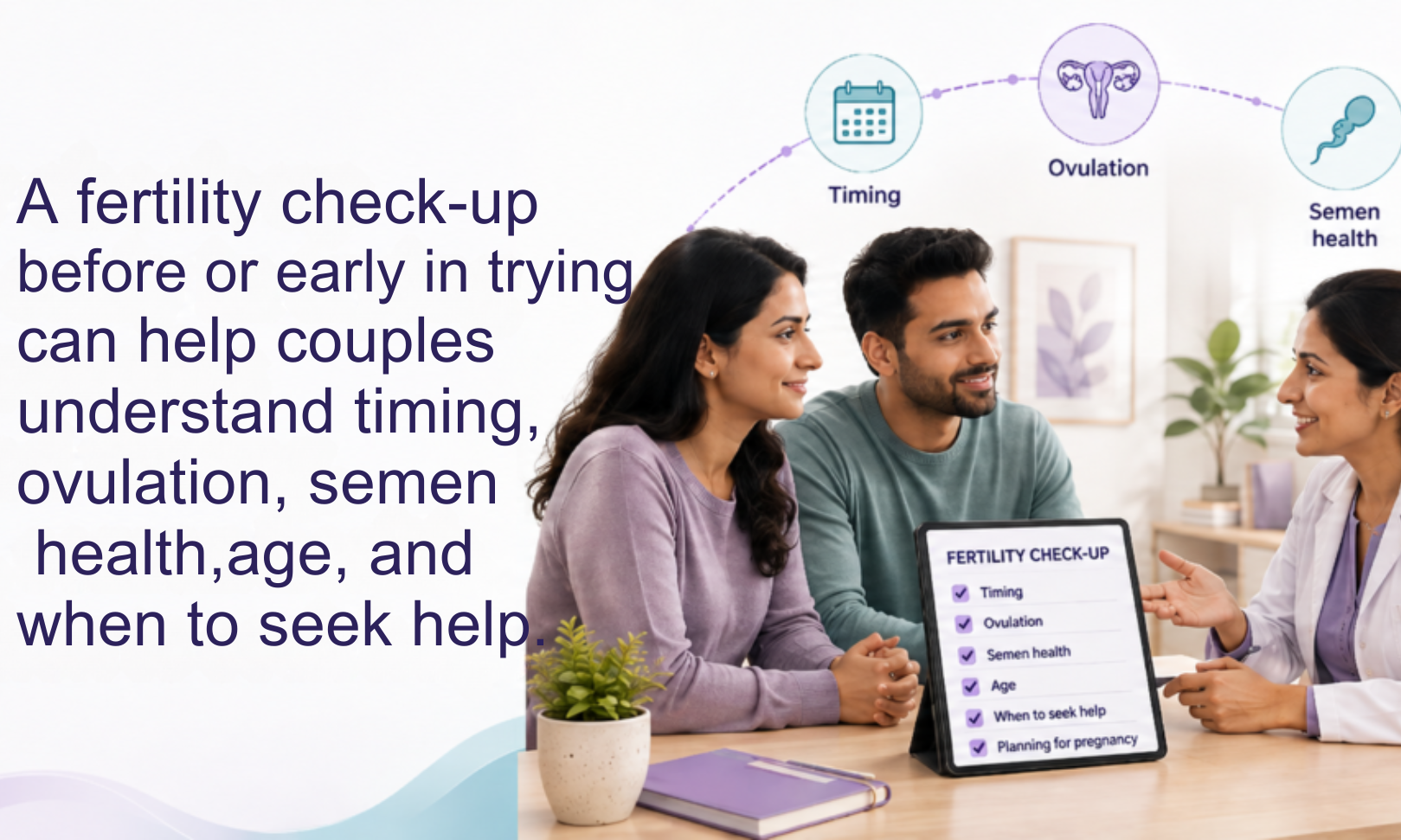
A fertility evaluation does not remove all uncertainty, but it can reduce guesswork. It can tell a couple whether ovulation is happening, whether semen analysis is normal, whether the tubes need checking and whether age changes the urgency.
That is why medical clarity can be emotionally kind.
Stress can change behaviour
Even when stress is not the “cause,” it can affect the journey.
Some couples begin to avoid intercourse because it feels scheduled and tense. Some become hyper-focused, turning every cycle into a high-pressure project. Some withdraw from friends. Some stop treatment because the emotional cost is too high. Others jump too quickly into the next procedure because waiting feels unbearable.
ASRM notes that infertility patients may respond to stress by aggressively pursuing treatment and procedures, or by withdrawing from family, friends and community. Neither extreme is ideal.
This is where support becomes practical, not decorative.
A calmer couple may ask better questions. They may understand options more clearly. They may avoid both delay and panic.
What should replace “just relax”?
Replace it with:
“Let us understand what is happening.”
That one sentence changes everything.
If you have been trying for a few months and are young with regular cycles, you may simply need better timing and patience. But if you have crossed the usual timelines, evaluation matters.
ASRM advises couples to seek help after 12 months of regular unprotected sex if the person with ovaries is under 35, and after 6 months if 35 or older. It also advises earlier evaluation if there are irregular cycles, possible tubal risk, testicular issues or sexual function concerns.
So the question is not, “Are we stressed?”
The better questions are:
Are we ovulating regularly?
Have we done semen analysis?
Are the tubes likely open?
Are there PCOS, thyroid, endometriosis or uterine clues?
Is age changing our timeline?
Have we been trying long enough to seek help?
These questions create a plan.
Ways to reduce the emotional burden
Stress reduction may not guarantee pregnancy, but it can help people feel more in control. ASRM lists several stress-reducing supports that fertility patients may find helpful, including walking, mindfulness, journaling, meditation, psychotherapy, cognitive behavioural therapy and support groups.
The best method is the one you can actually continue.
For one woman, it may be a daily walk without fertility podcasts. For one husband, it may be finally doing the semen analysis instead of silently worrying. For a couple, it may be one evening a week where fertility is not discussed.
The goal is not to become stress-free. Nobody going through infertility is stress-free.
The goal is to stop stress from becoming the only voice in the house.
A gentle next step
For couples in Noida and Delhi NCR, a fertility clarity consultation at Zeeva Fertility can help replace vague advice with a structured understanding of what may be happening.
The consultation should not begin with “relax.”
It should begin with listening.
How long have you been trying? Are cycles regular? Has semen analysis been done? Is there PCOS, thyroid disease, endometriosis, miscarriage or previous treatment history? What has already been checked? What has not?
Sometimes the kindest thing a doctor can give a couple is not treatment on day one.
It is a map.
Because “just relax” gives you a burden.
Clarity gives you a way forward.
FAQs
Can stress cause infertility?
Stress may affect emotional health, sleep, intimacy and treatment experience, but ASRM says it is not clear exactly how stress impacts fertility or whether high stress prevents pregnancy.
Should we stop trying for a while?
Some couples benefit from a short emotional pause. But if you have crossed fertility evaluation timelines, do not use a break to avoid needed testing.
What should we check before blaming stress?
Ovulation, semen analysis, age, tubes, uterus, thyroid, PCOS symptoms, endometriosis signs and miscarriage history may all matter.
Can counselling help during infertility?
Yes. Counselling can help with sadness, anxiety, marital stress, decision-making and treatment fatigue.
When should we see a fertility specialist?
After 12 months of trying if under 35, after 6 months if 35 or older, or sooner with irregular periods, painful periods, miscarriage, male factor concerns or known medical conditions.





0 Comments
Join the conversation