


.

Preserve Your Fertility For Future with Confidence.

Advanced sperm Freezing technology at Zeeva Fertility helps you plan motherhood on your timeline—guided by expert care and proven success.

Every treatment decision is shaped with 20+ years of proven clinical experience

Trust

25,000+

Happy Families

Result

78%+

IVF Success Rate

Positive

1,650+

Google Reviews

Heritage

20+

Years of Experience

What is Sperm Freezing?

Sperm freezing, also known as sperm cryopreservation or semen freezing, is a fertility preservation technique in which sperm is collected, processed, frozen and stored for possible future use. It can help men preserve their reproductive options when fertility may be affected by medical treatment, health conditions, age-related planning or other personal circumstances.

Sperm freezing may be considered before chemotherapy, radiation therapy or certain surgeries that could affect sperm production. It may also be useful for men with declining sperm quality, those who may have difficulty providing a semen sample on the day of fertility treatment, or couples who want to preserve sperm before an IVF or ICSI cycle.

During the process, the semen sample is evaluated in the laboratory and mixed with a special protective solution called a cryoprotectant. The sample is then divided into labelled storage containers and frozen under controlled conditions before being stored at very low temperatures in liquid nitrogen.

When required in the future, the sperm can be thawed and used for fertility treatment such as IUI, IVF or ICSI, depending on sperm quality and the couple’s overall fertility assessment.

How Egg Freezing Works? 

  • Preserves Eggs for Future Use: Egg freezing allows mature eggs to be collected and stored now, giving women the option of using those eggs for fertility treatment later.

  • Egg Age Is Preserved at Freezing: Once eggs are frozen, they retain the biological age at which they were collected, although future pregnancy outcomes depend on several additional factors.

  • Can Be Considered for Different Reasons: Women may consider freezing eggs because of delayed family planning, declining ovarian reserve, upcoming medical treatment, or other circumstances affecting future fertility.

  • It Is Fertility Preservation, Not a Guarantee: One of the key egg freezing benefits is preserving an additional reproductive option, but not every frozen egg will ultimately result in a pregnancy.

— TREATMENT PROCEDURE

Sperm Freezing Step-by-Step Procedure

1. Fertility Consultation and Assessment

The process usually begins with a consultation with a fertility specialist. The doctor reviews the patient’s medical history, reason for fertility preservation, previous fertility reports and any upcoming treatments that could affect reproductive health. For men planning chemotherapy, radiation therapy or other potentially fertility-affecting treatment, sperm preservation is ideally discussed before treatment begins whenever clinically possible.

2. Screening and Consent

Before sperm cryopreservation, the patient may be advised to undergo appropriate blood tests and infectious-disease screening according to clinical and regulatory requirements. Written consent is also completed before freezing and storage. This records important instructions regarding the storage and future use of the sperm sample.

3. Semen Sample Collection

A semen sample is generally collected through masturbation in a private collection room using a sterile container provided by the fertility centre. Patients are usually given instructions regarding the period of abstinence before collection. For standardized semen assessment, WHO laboratory guidance recommends approximately 2–7 days of ejaculatory abstinence. Lubricants should generally be avoided unless specifically approved as sperm-safe. If sperm numbers are low or fertility preservation is especially important, the doctor may recommend collecting and freezing more than one sample.

4. Semen Analysis

The semen sample is assessed in the andrology laboratory. Important characteristics such as sperm concentration, motility and other semen parameters are evaluated. The results help the fertility team understand the quality and quantity of sperm available for freezing and may also help determine which fertility treatment could be appropriate when the sample is used later.

5. Preparation for Freezing

The sperm sample is processed and mixed carefully with a cryoprotective solution. Cryoprotectants are used to reduce cellular damage that could otherwise occur during the freezing process.

6. Sample Division and Identification

The prepared sperm is usually divided into multiple securely labelled containers or straws. Dividing the sample into smaller portions can allow the laboratory to thaw only the amount required for a future fertility treatment rather than thawing the entire stored sample at once.

7. Cryopreservation and Storage

The prepared sperm is usually divided into multiple securely labelled containers or straws. The prepared samples are gradually cooled according to laboratory cryopreservation protocols and transferred to specialised cryogenic storage systems. Cryopreserved reproductive samples may be maintained in liquid nitrogen at approximately –196°C, under carefully controlled laboratory conditions.

8. Using Frozen Sperm in the Future

When the patient is ready to use the stored sperm, the required sample is thawed and reassessed by the laboratory. Depending on the number and motility of sperm remaining after thawing, the fertility specialist may recommend IUI, conventional IVF or ICSI. The most appropriate option is decided after evaluating both partners and the post-thaw sperm quality.

What Couples Should Know Before Sperm Freezing

Sperm Freezing Preserves an Option, Not a Pregnancy Guarantee

Freezing sperm can preserve sperm for possible future use, but storing sperm does not guarantee fertilisation, pregnancy or a live birth. Future outcomes depend on several factors, including sperm quality, the female partner’s reproductive health, age, egg quality and the fertility treatment eventually required.

Some Sperm May Not Survive Thawing

It is normal for sperm motility or the number of viable sperm to decrease after the freezing and thawing process. Not every sperm cell survives cryopreservation. This is one reason why the fertility specialist may advise storing multiple samples when possible, particularly if the initial sperm count or motility is low.

Timing Can Be Important Before Cancer Treatment

For patients undergoing chemotherapy, radiation therapy or other treatments that may damage fertility, sperm freezing should ideally be discussed before the treatment begins whenever medically feasible. Early consultation allows the fertility and treating medical teams to coordinate care without unnecessary delay.

More Than One Sample May Be Recommended

One semen sample may be sufficient for some patients, while others may benefit from storing multiple samples. This depends on sperm concentration, motility, medical circumstances and how the frozen sperm is expected to be used later.

The Future Treatment Depends on Sperm Quality

Frozen sperm does not always mean IVF will be required. Depending on the post-thaw sperm quality and the couple’s fertility factors, frozen sperm may potentially be used for IUI, IVF or ICSI. In samples with a very limited number of suitable sperm, ICSI may be considered.

Consent and Storage Decisions Are Important

Before sperm freezing, patients should understand the consent requirements, storage terms, applicable charges and instructions regarding what should happen to stored sperm under different circumstances. Cryopreservation and storage in India should be carried out in accordance with applicable Assisted Reproductive Technology regulations and consent requirements.

Keep Your Contact Details Updated

Patients with cryopreserved sperm should remain in contact with their fertility centre and keep their telephone number, email address and other relevant information updated. This helps the clinic communicate regarding storage, consent and future instructions.

Why Choose Zeeva Fertility for Sperm Freezing?

Experienced Fertility Team

At Zeeva Fertility, sperm freezing is planned after an individual assessment rather than using the same approach for every patient. Our fertility specialists help patients understand whether sperm preservation is appropriate and how it may fit into their future reproductive plans.

Dedicated Andrology and IVF Laboratory Support

Sperm assessment, preparation and cryopreservation require careful laboratory handling. Zeeva Fertility provides andrology and IVF laboratory support for semen evaluation, sperm processing and cryopreservation.

Careful Sample Identification and Handling

From semen collection and laboratory assessment to cryopreservation and storage, appropriate identification and documentation protocols are followed to support safe handling of reproductive samples.

Personalised Fertility Preservation Planning

A patient with low sperm concentration may require a different strategy from someone freezing sperm before cancer treatment or before an IVF cycle. Our specialists assess the patient's semen parameters, medical circumstances and future fertility goals before recommending the number of samples or possible future treatment options.

Support for Cancer Patients

atients who need fertility preservation before chemotherapy, radiotherapy or other potentially fertility-affecting medical treatments may require timely coordination. Our fertility team can work with the patient's treating medical team to help plan fertility preservation at an appropriate stage before treatment whenever clinically feasible.

Complete Fertility Treatment Support

If frozen sperm is required later, the couple can be evaluated for the fertility treatment most appropriate to their circumstances, including IUI, IVF or ICSI, based on sperm quality and the reproductive health of both partners.

Clear Counselling Before Freezing

Patients are guided through the sperm freezing procedure, sample collection, laboratory assessment, storage considerations and possible future use before proceeding. This helps couples make an informed decision about fertility preservation.

Meet Our Fertility Experts

The Experts Guiding Your Journey

20+ Years Experience

Dr. Shweta Goswami

Founder & Medical Director, Zeeva Fertility
MBBS (Honours) – Maulana Azad Medical College, New Delhi • MD (Obs & Gyn) – Safdarjung Hospital • FNB in IVF & Reproductive Medicine – IRM Kolkata
20+ Years Experience

Dr. Aarthi Mani

Senior Consultant, Zeeva Fertility
MBBS – Thoothukudi Government Medical College & Hospital (Tamil Nadu Dr. MGR University) • MS (Obstetrics & Gynaecology) – Sri Ramachandra Medical College & Research Institute (Gold Medalist) • FNB (Fellowship in IVF & Reproductive Medicine) – NOVA IVF
16+ years of experience

Dr. Shuchi Lakhanpal Kalia

Senior Fertility Specialist
MBBS - Gold Medalist • MS in Obstetrics and Gynaecology - Delhi University • DNB in Obstetrics and Gynaecology • Diploma in Clinical ART • Fellowship in Minimal Access Surgery.
Available at:
17+ Years Experience

Dr. Shipra Gupta

IVF & Infertility Specialist
M.B.B.S. VMMC & Safdarjung Hospital, New Delhi (2009) • Diploma (D.G.O.) in Obstetrics and Gynaecology VMMC & Safdarjung( 2011) • M.D. in Obstetrics and Gynaecology VMMC& Safdarjung Hospital, New Delhi (2014) • FOGSI certified Fetal medicine specialist Apollo hospitals( 2014) • Basic and Advanced Laparoscopy at AIIMS, New Delhi (2015) • Fellowship in Pelvic Floor Reconstructive surgeries and Minimal Invasive Gynecology at Scripps Clinic, San Diego, U.S.A (2016) • Fellowship in Reproductive Medicine and ART Max Hospital, New Delhi (2018)
Available at:
16+ Years Experience

Dr. Snehal Shah Mahajan

Consultant, Zeeva Fertility
MBBS – ACPM Medical College, Mumbai (2004) • Diploma in Obstetrics & Gynaecology (DGO) – CPS Mumbai (2010) • MBA in Healthcare Management – Sikkim Manipal University (2015) • Certificate Course in Infertility (2021)
Available at:
12+ Years Experience

Dr. Mayank Sharma

Associate Consultant, Zeeva Fertility
MBBS – NKPSIMS & Lata Mangeshkar Hospital, Nagpur • DGO – MVJ Medical College & Research Centre, Bengaluru • Fellowship in Reproductive Medicine – IIRFT, New Delhi
7+ Years Experience

Dr. Avnika Kapoor

Consultant, Zeeva Fertility
MBBS – Bharati Vidyapeeth Deemed University, Pune • MS (Obstetrics & Gynaecology) – Bharati Vidyapeeth Deemed University, Pune • Fellowship in Reproductive Medicine – IIRFT, Delhi • Cosmetic Gynaecology – ILAMED, Delhi • Fellowship in Gynae Ultrasound – Randhawa Institute, Delhi
Available at:
7 years of experience

Dr. Ayushi Bhardwaj

IVF & Fertility Specialist
MBBS • MS (Obstetrics & Gynaecology) • DNB • FMAS • Fellowship-trained IVF Specialist
10+ Years Experience

Dr Deepika Mann

Associate - IVF Consultant
MBBS from K.S. Hegde Medical Academy, Mangalore • M.S from jjmmc, Davangere,karnataka • Fellowship in Reproductive Medicine from International Fertility Centre, Delhi
Available at:

— Our Centres

Quality Fertility Care, Now Near You

Our cutting-edge fertility centres across Delhi NCR — Noida, Delhi, Ghaziabad and Greater Noida

Zeeva Fertility, Sector 63, Noida

H 1A, 37, H Block, Sector 63, Noida, Uttar Pradesh 201301

(+91) 7669381393

10 am - 6 pm

Zeeva Fertility in South Extension, Delhi

3rd Floor, M-2, South Extension II, Block M, New Delhi, Delhi 110049

(+91) 7669381393

10 am - 6 pm

Zeeva Fertility, Sector 104, Noida

Zeeva Clinic, HA 103A, First Floor, Sector 104, Noida, Uttar Pradesh 201304

(+91) 7669381393

11 am - 1 pm & 5 am - 9 pm
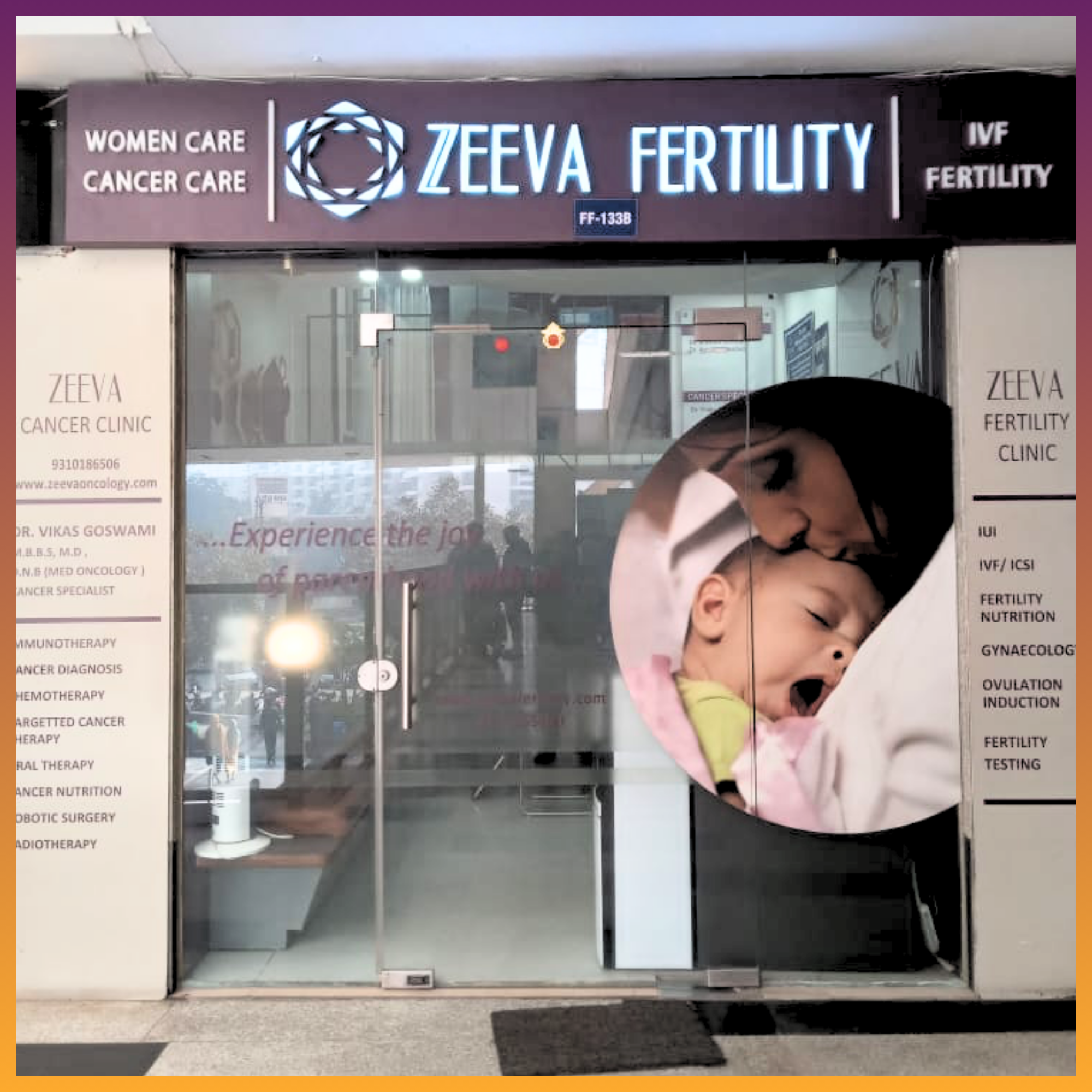
Greater Noida to Gaur City 1 Greater Noida West

Zeeva Fertility, 9th Floor, NH-3, GH 01, Gaur City 1, Sector 4, Greater Noida west, Ghaziabad, Uttar Pradesh 201009

(+91) 7669381393

10 am - 1 pm

Zeeva Fertility in RDC, Ghaziabad

District Centre, RDC, Sector 15, Sector 10, Raj Nagar, Ghaziabad, Uttar Pradesh 201002

(+91) 7669381393

2 pm - 5 pm

Zeeva Fertility in Indirapuram, Ghaziabad

GF-01, 698, Niti Khand I, Indirapuram, Ghaziabad, Uttar Pradesh 201014

(+91) 7669381393

6 pm - 8 pm

What our patients are saying

Failed IVF

Natural Pregnancy

IVF

Tubal Blockage

Low AMH

IVF

Failed IVF

Ready to take the next step?

Talk to a Zeeva specialist — free, no pressure, clear options.

— Common questions

Fertility Questions, Answered

Who should consider egg freezing?

Women who want to delay pregnancy for personal, professional, or medical reasons (such as cancer treatment) can benefit from egg freezing.

The best time is typically before the age of 35, when egg quality and quantity are higher. However, it can still be done later with proper evaluation.

This depends on your age and fertility profile. Your doctor will recommend the ideal number to maximize future success.

Egg retrieval is performed under light sedation, so you won’t feel pain during the procedure. Mild discomfort afterward is normal.

Eggs can be safely stored for many years without significant deterioration in quality.

Success depends on the age at which eggs were frozen and their quality. Younger eggs generally result in higher success rates..

Yes. It is a well-established and widely used procedure with proven safety.

No, but it significantly improves your chances compared to trying naturally at an older age.

One egg freezing cycle usually takes about 2–3 weeks.

Maintaining a healthy lifestyle, balanced nutrition, stress management, and avoiding smoking/alcohol can improve outcomes.

Ready to take the next step?

Schedule a consultation with our fertility specialists today. Let’s discuss your options and build a plan that brings you closer to your baby.