


Best Fertility and Low AMH Treatment in Delhi NCR
Every treatment decision is shaped with 20+ years of proven clinical experience
Trust
25,000+
Happy Families
Result
78%+
IVF Success Rate
Positive
1,650+
Google Reviews
Heritage
20+
Years of Experience


What is Low AMH?
Anti-Müllerian Hormone (AMH) is produced by small follicles in the ovaries and is commonly used to estimate ovarian reserve. In simple terms, low AMH means the ovaries may have fewer recruitable follicles than expected for a woman’s age. However, AMH does not measure egg quality directly or determine whether pregnancy is possible.
There are usually no specific symptoms of low AMH. Many women have regular menstrual cycles and discover lower AMH levels only during fertility testing. Therefore, AMH should be interpreted alongside age, antral follicle count, menstrual history, and other reproductive factors rather than being considered a diagnosis of infertility.
— TREATMENT PROCEDURE
Low AMH Evaluation & Fertility Treatment Process Step by Step
A personalised evaluation helps determine how low AMH levels may influence ovarian response and fertility planning. At Zeeva Fertility, the process considers ovarian reserve, age-related fertility factors, and the couple’s overall reproductive health before selecting suitable treatment options.

STEP 1: Ovarian Reserve Assessment
The fertility specialist reviews AMH levels alongside age, menstrual history, past pregnancy history, and previous low AMH fertility treatment. Since AMH values may vary with age, the same result can have different clinical implications for two women. This assessment helps estimate expected ovarian response rather than predict pregnancy chances from AMH alone.
STEP 2: Ultrasound & Hormonal Evaluation
An antral follicle count (AFC) ultrasound helps estimate the number of small follicles visible in the ovaries. Additional tests, such as FSH and estradiol, may be considered when clinically appropriate. Together, these findings help doctors assess ovarian reserve and plan stimulation treatment if needed.
STEP 3: Complete Couple Fertility Assessment
Fertility depends on more than just the symptoms of low AMH. The doctor may assess ovulation, fallopian tube health, uterine conditions, and semen parameters to identify other factors affecting conception. This helps ensure that treatment decisions address the couple’s complete fertility picture rather than focusing only on AMH.
STEP 4: Personalised Treatment Planning
Depending on age, duration of infertility, ovarian reserve, and other findings, the doctor may recommend continued natural attempts, ovulation monitoring, IUI, or IVF. Egg freezing may also be discussed when fertility preservation is relevant. Low AMH treatment is individualised because a lower AMH value alone does not mean IVF is necessary.
STEP 5: Treatment Monitoring & Follow-Up
When ovarian stimulation is required, ultrasound monitoring helps track follicle growth and assess the ovaries’ response to medication. Hormone tests may also be used when needed. The findings help doctors adjust the low AMH fertility treatment and make informed decisions about the next stage of the cycle.

What Couples Should Know About Low AMH
A low AMH result can be worrying, particularly when pregnancy is being planned. However, understanding what the test measures and what it cannot predict can help couples make informed decisions without unnecessary fear.
1. Low AMH Does Not Mean Pregnancy Is Impossible
Low AMH indicates a potentially reduced ovarian reserve, not a confirmed inability to conceive. Women with low AMH may still ovulate regularly and become pregnant naturally. Age, sperm health, fallopian tube function, and other reproductive factors also influence pregnancy chances.
2. AMH Does Not Directly Measure Egg Quality
AMH primarily helps estimate egg quantity and expected ovarian response. It does not directly determine whether the remaining eggs are healthy. Age is a much stronger factor when assessing egg quality, which is why two women with similar AMH values may have different reproductive prospects.
3. Low AMH May Affect IVF Response
Women with low AMH levels may develop fewer follicles and produce fewer eggs during ovarian stimulation. This can affect the number of eggs available for fertilisation and embryo development. However, a lower egg yield does not automatically mean IVF cannot succeed, and outcomes depend on several additional factors.
4. Treatment Should Not Be Based on AMH Alone
An AMH report provides useful information, but it cannot independently determine the best fertility treatment. Doctors must also consider age, menstrual cycles, AFC findings, tubal health, sperm parameters, and previous treatment outcomes. This helps avoid unnecessary procedures or treatment decisions based on one test.
5. Timely Fertility Planning Can Be Important
Ovarian reserve generally declines with age, but AMH alone cannot reliably predict how quickly an individual woman’s fertility will change. If pregnancy is being delayed or fertility concerns are present, a timely consultation can help assess available options without assuming that immediate IVF or egg freezing is always required.
Why Choose Zeeva Fertility for Low AMH?
At Zeeva Fertility, we understand that an AMH result is only one part of a woman’s reproductive health. For women seeking low AMH treatment in Delhi NCR, our approach focuses on combining ovarian reserve assessment with age, fertility history, and the couple’s overall medical findings to develop a personalised treatment plan.

1. Detailed Ovarian Reserve Evaluation
Our specialists interpret symptoms of low AMH alongside antral follicle count, age, menstrual history, and previous treatment response. This helps distinguish between a lower expected ovarian response and other fertility concerns that may also need evaluation.
2. Personalised Treatment Planning
Treatment recommendations are based on reproductive goals, expected ovarian response, duration of infertility, and other clinical findings. Whether natural attempts, IUI, IVF, or fertility preservation is being considered, the focus is on choosing an appropriate approach rather than following the same treatment pathway for every patient.
3. Realistic Counselling About Fertility Options
Patients receive clear explanations of what low AMH levels can and cannot predict. Counselling includes expected egg yield during stimulation, available treatment options, possible limitations, and realistic expectations, helping couples make informed decisions about their fertility journey.
4. Individualised Monitoring During Treatment
When ovarian stimulation is needed, ultrasound and selected hormone tests help monitor follicular development and treatment response. This information supports decisions about medication adjustments, egg retrieval planning, and further low AMH treatment, while keeping the patient’s individual clinical needs in focus.
— Common questions
Fertility Questions, Answered
Low AMH usually suggests reduced ovarian reserve or fewer recruitable eggs, but it does not by itself determine whether a woman can become pregnant.
Yes, natural pregnancy may still be possible, particularly when ovulation is occurring and other fertility factors are favourable. Age and overall reproductive health are also important.
No. AMH primarily reflects egg quantity or ovarian reserve, not egg quality. Age is generally a more important factor in estimating egg quality.
IVF may be considered in some patients with low AMH, especially when age, duration of infertility, or other fertility factors make treatment more time-sensitive. It is not automatically required for everyone.
AMH levels can vary between tests, but there is no established treatment that reliably restores ovarian reserve. Management focuses on timely fertility planning and treatment based on the complete fertility profile.

Meet Our Fertility Experts
The Experts Guiding Your Journey
Dr. Shweta Goswami
Dr. Aarthi Mani
Dr. Snehal Shah Mahajan

Dr. Mayank Sharma

Dr. Avnika Kapoor

Dr. Ayushi Bhardwaj

Dr Deepika Mann

Dr Aayushi Bansal

Dr. Shuchi Lakhanpal Kalia

Dr. Shipra Gupta

— Our Centres
Quality Fertility Care, Now Near You
Our cutting-edge fertility centres across Delhi NCR — Noida, Delhi, Ghaziabad and Greater Noida
Zeeva Fertility, Sector 63, Noida
H 1A, 37, H Block, Sector 63, Noida, Uttar Pradesh 201301
(+91) 7669381393
10 am - 6 pm

Zeeva Fertility in South Extension, Delhi
3rd Floor, M-2, South Extension II, Block M, New Delhi, Delhi 110049
(+91) 7669381393
10 am - 6 pm

Zeeva Fertility, Sector 104, Noida
Zeeva Clinic, HA 103A, First Floor, Sector 104, Noida, Uttar Pradesh 201304
(+91) 7669381393
11 am - 1 pm & 5 am - 9 pm
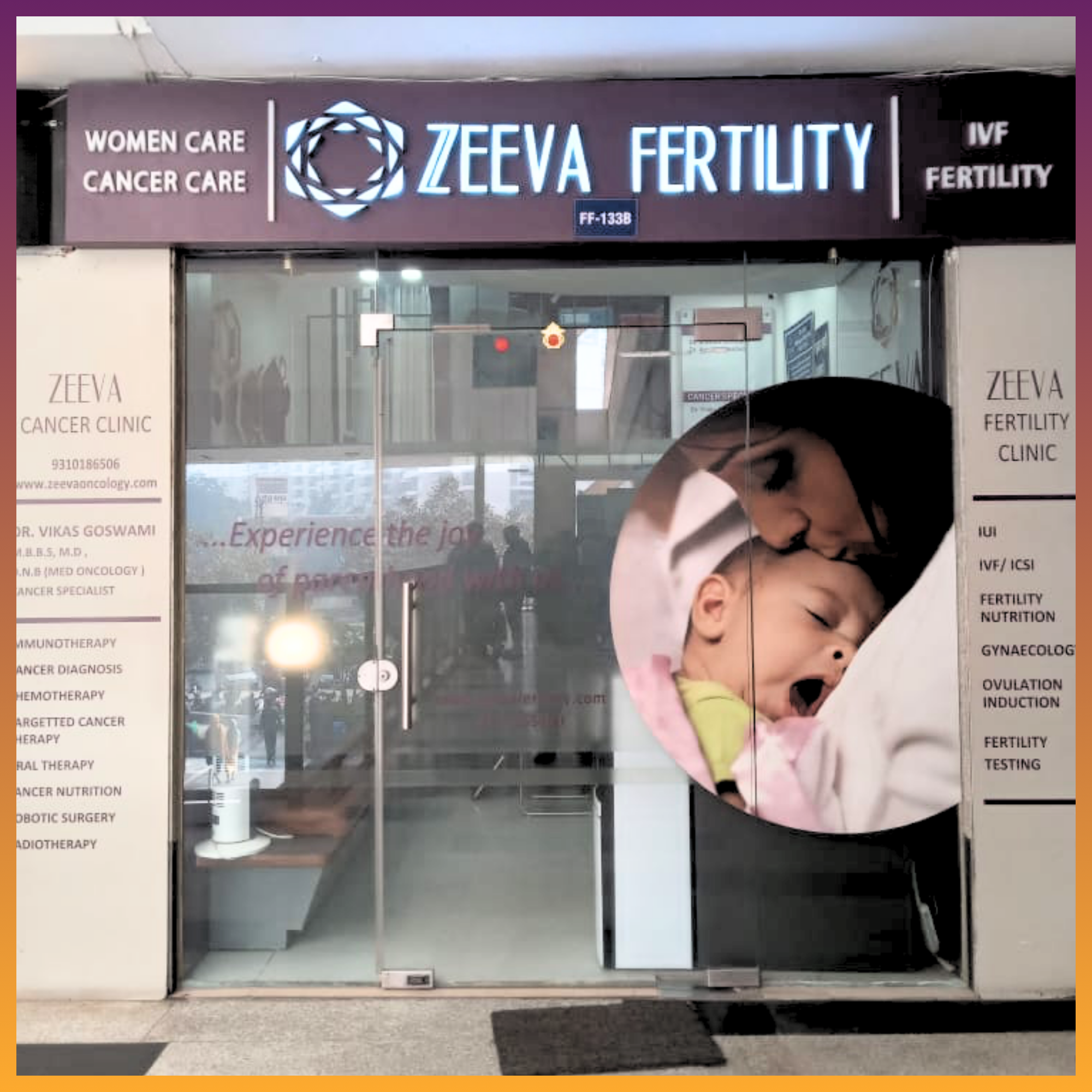
Zeeva Fertility in Greater Noida West
Zeeva Fertility, 9th Floor, NH-3, GH 01, Gaur City 1, Sector 4, Greater Noida west, Ghaziabad, Uttar Pradesh 201009
(+91) 7669381393
10 am - 1 pm

Zeeva Fertility in RDC, Ghaziabad
District Centre, RDC, Sector 15, Sector 10, Raj Nagar, Ghaziabad, Uttar Pradesh 201002
(+91) 7669381393
2 pm - 5 pm

Zeeva Fertility in Indirapuram, Ghaziabad
GF-01, 698, Niti Khand I, Indirapuram, Ghaziabad, Uttar Pradesh 201014
(+91) 7669381393
6 pm - 8 pm

What our patients are saying
Low AMH
Low AMH
IVF
Tubal Blockage

IVF

IVF

Failed IVF
Ready to take the next step?
Talk to a Zeeva specialist — No pressure, clear options.
Real Stories. Real Hope. Real Families
- Enu Bakkey
- Marie Noela Eny
- Robina Khan
- Moshiur Rahman
Our Blogs
Expert fertility insights

![10 Best IVF Centers in Noida with High Success Rates in 2026 [UPDATED]](https://zeevafertility.com/wp-content/uploads/2022/11/top-10-ivf-treatment-centres-in-noida.jpg)